From Family Roots to National Peace: Women Unlimited Launches Peace-building Initiative
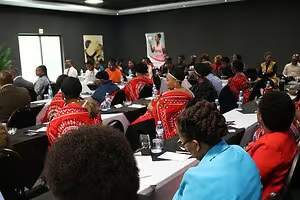
In August 2025, Women Unlimited Eswatini officially launched its Women and Peace initiative, bringing together stakeholders from government, civil society, academia, and law enforcement to examine the links between family stability and national peace. The initiative is supported by the
Women Peace and Humanitarian Fund and was held under the theme
“From peace in the home to peace in the family,” highlighting the root causes of conflict and chart a pathway toward sustainable peacebuilding.
Understanding the Roots of Conflict
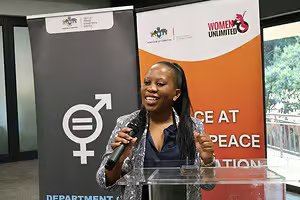
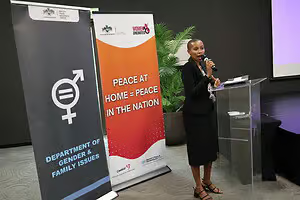
Opening the discussion, the Deputy Prime Minister’s Office-Department of Gender and Family Issues Director Nomzamo Dlamini presented the now widely referenced
“tree concept” to frame the conversation. She explained that many of the crises visible in communities are symptoms of deeper systemic challenges. At the roots lie unemployment, substance abuse, untreated mental health conditions, intergenerational conflict, and the culture of silence around domestic issues, known as
tibi tendlu. These hidden drivers manifest in “branches” such as domestic violence, rising crime rates, vigilantism, youth delinquency, and gender-based violence.
“What is seen in the community is only the consequence,” she said, “
the causes are embedded much deeper.”
Women as Agents of Peace

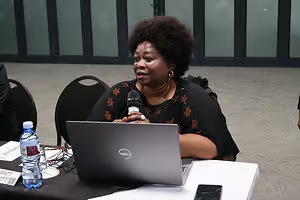
Our Founder and Executive Director, Vimbai Kapurura emphasized the critical role of women in sustaining peace. Women, she noted, are often the first responders in moments of conflict and play a central role as mediators and protectors of family values. Yet their contributions remain under-recognized due to limiting cultural norms, economic exclusion, and the widespread normalization of violence against women.
“Peace cannot be achieved without the meaningful participation of women,”
Vimbai Kapurura, Women Unlimited Founder & Executive Director said, calling for their empowerment alongside the active engagement of men and youth.
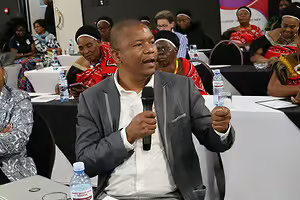
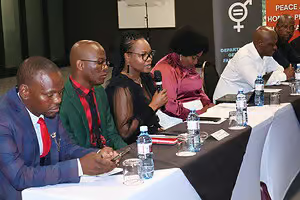
A multi-sectoral panel provided further perspectives, underscoring that effective peacebuilding must address both immediate triggers and underlying structural conditions. Recommendations included the integration of mental health education into schools, dismantling toxic notions of masculinity, addressing unemployment and poverty as key drivers of instability, and ensuring that both indigenous knowledge and modern practices are utilized in conflict resolution.
Moving Beyond Surface-Level Interventions
Speakers were unanimous in warning against surface-level interventions. Addressing the symptoms of violence without tackling root causes, they argued, would only perpetuate cycles of instability. Instead, a holistic approach is required, one that strengthens family structures, promotes economic empowerment, and addresses systemic corruption.
Women Unlimited Eswatini remains commitment to positioning peace as a shared responsibility that begins within households and extends outward to communities and the nation.












0 Comments