From National Emergency to Continental Resolve: What Africa Can Learn from England’s Stand Against VAWG
Naming the Crisis
When the UK government declared violence against women and girls (VAWG) a national emergency just a day ago
(https://www.bbc.com/news/articles/cj69w7kezdzo ), it did something both simple and radical: it named the crisis plainly and committed the full weight of the state to confronting it.
The announcement that every police force in England and Wales will have specialist rape and sexual offenses teams by 2029 is not just a policing reform. It is a declaration that sexual and gender‑based violence is not inevitable, not a private matter, and not something survivors must endure in silence. It is a recognition that systems, not women, must change.
For
Women Unlimited, this announcement is both inspiring and unsettling. It invites us to imagine what could be possible if a similar level of investment was implemented closer to home.
Imagining a Different Future for Southern Africa
What would it mean if Southern Africa adopted a joined‑up regional approach to ending gender‑based violence?
Imagine specialised, well‑resourced police units across Eswatini, South Africa, Zambia, and neighbouring countries, units trained to understand survivor trauma, challenge rape myths, and hold perpetrators accountable.Imagine protection orders (restraining orders) that actually protect, recognised and enforced across borders.Imagine a shared regional message that violence against women and girls is not normal, not cultural, not excusable but antisocial, taboo, morally wrong.
Within a decade, this kind of collective approach could fundamentally change how our societies think about violence. And within a generation, our daughters might grow up without inheriting the fear, silence, and survival strategies of their mothers.
The Questions We Can No Longer Avoid
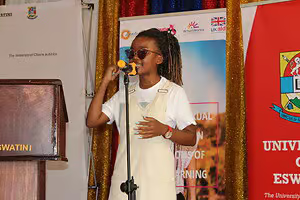
Yet imagination alone is not enough. We must ask ourselves difficult questions:Is there truly a desire for change in Africa?
On a positive turn, South Africa recently declared GBV a National Disaster on the eve of the recent G20 summit that is now awaiting mechanisation. Since 2000, Eswatini launched the Domestic Violence, Child Protection and Sexual Offenses Unit (DCS Unit) in over 24 police stations countrywide that have been a ray of hope to ending VAWG and VAC in the Kingdom.
With these positive developments, can African nations work together to design and implement our own solutions, or are we still conditioned to wait for help, funding, or direction from elsewhere?
Will our governments continue to see gender‑based violence as a national and regional emergency or only as a seasonal conversation during the 16 Days of Activism Against Gender Based Violence, International Women’s Day and other commemorations?
These questions are uncomfortable, but avoiding them has cost women and girls their safety, their dignity, and too often, their lives.
Growth That Carries Both Pride and Pain
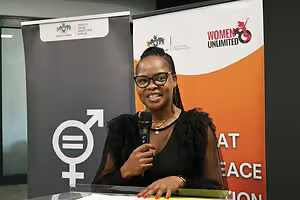 Women Unlimited’s
 expansion into Zambia is a milestone we hold with both pride and heaviness.Because behind every new office, every additional staff member, and every expanded programme is a quiet truth: the need has not decreased.
At the back of our minds was a hope that by now, growth would mean closure. That impact would mean fewer survivors knocking on our doors. That success would look like shrinking, not expanding.Instead, expansion has become a double‑edged sword. We grow not because the problem is solved, but because it remains urgent, widespread, and deeply rooted.
Strength in Solidarity Across the Region
What gives us hope is that
Women Unlimited does not stand alone.
Across Eswatini, and the wider region, we work alongside extraordinary Government, NGOs, community‑based organisations, shelters, legal aid groups, student movements, and faith‑based initiatives. Every day, these organisations show up with limited resources and limitless commitment.
The will to end violence against women and girls has always existed among women’s movements.What has been missing is not passion, expertise, or courage but coordinated political will and resolve.
From Isolated Efforts to Collective Action
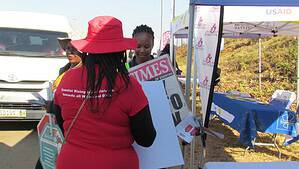
The UK’s approach reminds us of something crucial: meaningful change happens when prevention, protection, accountability, and culture change move together.
Africa does not need to copy and paste solutions from elsewhere. But we can learn from clarity of intent and seriousness of action.
What if our region chose unity over fragmentation? What if our governments collectively declared that violence against women and girls has no cultural justification, no political excuse, and no place in our future? What if we decided, together, that our girls deserve more than survival?
At
Women Unlimited, we believe this future is possible.
The question is no longer whether solutions exist. The question is whether our leaders are ready to match the courage that women and girls across Africa show every single day. History will remember who chose silence. And it will remember who chose to act.



0 Comments