Building Peace from Family Foundations: Women Unlimited Joins SADC in Advancing the Peace Agenda
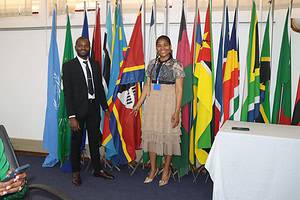
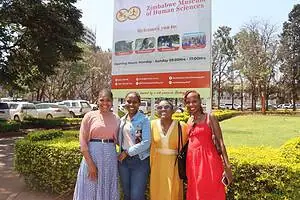
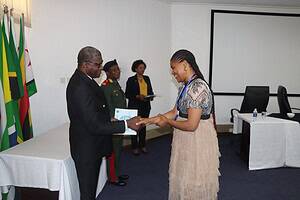
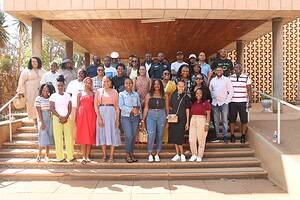
In September 2025, Women Unlimited Eswatini had the honour of participating in the SADC Political Advisor’s Course in Peace Support Operations, hosted at the SADC Regional Peacekeeping Training Centre in Harare, Zimbabwe. This prestigious course brought together regional actors committed to peace, stability, and good governance.
Our participation was especially significant as it directly links to Women Unlimited’s ongoing Initiative on
Strengthening The Women’s Movement Toward Lasting Peace in Eswatini, supported by the
Women’s Peace and Humanitarian Fund (WPHF) and builds on the work we began in 2022, in
Amplifying women’s voices in Peace-making processes in Eswatini.
Why Peace Begins at Home
Eswatini’s peace and security challenges are layered. Political contestations, socio-economic inequalities, and high levels of gender-based violence create instability that is felt both publicly and privately.
Our 2022 Initiative;
Amplifying Women’s Voices in Peace-Making Processes in Eswatini highlighted a painful reality: unresolved family conflicts and entrenched patriarchal norms often escalate into community violence and, ultimately, national-level unrest. Women already play a pivotal role in the home keeping the peace and carrying the burden of unpaid labour.
This is why Women Unlimited insists that peace begins at home. Families are the first places where young people learn either to resolve disputes through dialogue or to normalize violence as a means of control. Building stronger, more resilient families is therefore essential for preventing violence and cultivating a culture of peace.
The SADC Political Advisors Course
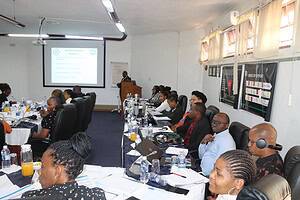
The SADC Political Advisors Course was designed to enhance the political advisory knowledge, skills, and attitudes of participants serving or preparing to serve in Peace Support Operations. Its specific objectives were to:
- Enhance diplomatic and advisory skills through negotiation, mediation, and diplomacy.
- Strengthen core competencies in political analysis, strategic advising, conflict prevention, and diplomatic communications.
- Deepen understanding of regional political dynamics and governance systems.
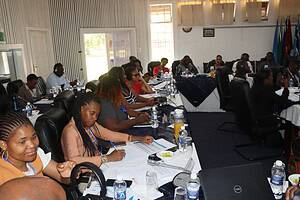
Across two weeks, the course explored themes of peace, security, and stability, with a strong focus on the role of Peace Support Operations in building sustainable peace.
Participants engaged in intensive sessions on conflict analysis, legal frameworks, mandate monitoring, gender mainstreaming, cultural awareness, and protection issues such as child rights and prevention of sexual exploitation and abuse.
Lessons for Eswatini
For Women Unlimited, several key lessons emerged from the Course. First, the importance of gendered conflict analysis became clear: lasting and sustainable peace cannot be achieved without fully acknowledging how conflict disproportionately affects women and girls and taking deliberate steps to address these impacts.
The role of strategic communication was also highlighted. Effectively shifting narratives around peace and women’s leadership requires intentional engagement with policymakers, the media, and the public, ensuring that these voices are visible and heard.
Additionally, The course reinforced that accountability strengthens trust. By embedding the high ethical and compliance standards of Peace Support Operations into both national and community-level peacebuilding efforts, public trust can be restored and the overall effectiveness of initiatives significantly enhanced.
These lessons feed directly into our ongoing Initiative in
Strengthening Women’s Movement Toward Lasting Peace in Eswatini, which equips women and youth with tools to influence peace processes and resolve conflicts non-violently.
Advancing Peace in Eswatini
The challenges facing Eswatini; gender inequality, political contestations and widespread gender-based violence are daunting. Yet our participation in this regional platform affirms that solutions exist when local realities are connected to continental and regional frameworks. Peace is not only the absence of conflict; it is the active presence of justice, dignity, and opportunity.



0 Comments